 Varun Arora
AI in Emergency Dispatch Systems: How AI is Transforming Crisis Response and Public Safety in the UAE
It's 2:14 AM on Sheikh Zayed Road. A tourist's rental car has spun out near an interchange, and a bystander is dialing 999 with shaking hands, trying to explain a location he doesn't recognize in a language the operator doesn't speak fluently. In the old model of dispatch, this call gets logged, transferred, clarified, and routed — and every one of those steps eats seconds that matter. In an emergency, seconds decide outcomes. This is exactly the gap artificial intelligence is closing. AI-powered dispatch systems can transcribe and translate that call in real time, pull GPS data before the caller finishes a sentence, flag the injury severity from voice stress patterns, and route the nearest ambulance — all before a human operator would have finished writing the address down. Across the UAE, this shift isn't theoretical. It's already underway, driven by national Smart Government initiatives that treat public safety infrastructure as a core pillar of digital transformation. This guide breaks down how AI is reshaping emergency dispatch in the UAE — the technology behind it, the agencies already using it, and what it takes to deploy it responsibly. Key Takeaways AI accelerates emergency response by automating call intake, prioritizing incidents, and dispatching the nearest available responders in real time. Predictive analytics help emergency agencies anticipate high-risk areas and strategically position ambulances, police, and fire units before emergencies occur. Multilingual AI voice assistants support Arabic, English, and other common languages, ensuring faster communication across the UAE's diverse population. Real-time integration with GIS, IoT devices, CCTV, drones, and existing CAD systems enhances situational awareness and resource coordination. UAE government initiatives, including projects by NCEMA and Dubai Police, demonstrate how AI is strengthening national public safety and smart city infrastructure. AI reduces operator workload and human error by automating transcription, incident classification, and repetitive dispatch tasks. Modern AI dispatch platforms integrate with existing infrastructure, allowing agencies to modernize without replacing their entire Computer-Aided Dispatch (CAD) system. Organizations adopting AI-powered emergency dispatch today will achieve faster response times, improved operational efficiency, stronger public trust, and greater crisis preparedness. What Is AI in Emergency Dispatch Systems? AI in emergency dispatch refers to software that automates and accelerates the process of receiving, triaging, and routing emergency calls. It listens to incoming calls, transcribes and analyzes them in real time, scores their urgency, and matches the nearest available responder — police, ambulance, fire, or civil defence — to the incident. The same systems often layer in predictive analytics, forecasting where and when emergencies are likely to spike based on traffic, weather, and historical patterns, so agencies can position resources before the call even comes in. Why Emergency Dispatch Needs AI More Than Ever Growing Emergency Response Challenges The UAE's population has grown fast, and so has the pressure on its emergency infrastructure. Dubai alone hosts tens of millions of visitors a year, and mega events — from global expos to major sporting fixtures — bring dense, temporary crowds into areas dispatch systems weren't originally sized for. Add rapid urbanization, more vehicles on the road, and taller, denser buildings, and you get an emergency response system that has to do more with the same headcount. Limitations of Traditional Dispatch Systems Legacy dispatch relies almost entirely on human bandwidth. A single operator can only take one call at a time, triage it manually, and relay details verbally to responders. That creates predictable failure points: Long hold times during high-volume periods Manual triage that varies operator to operator Human error under stress — a wrong address, a missed detail Resource shortages during simultaneous incidents Communication gaps between agencies that don't share a unified platform None of these are failures of effort. They're the ceiling of what manual systems can do. Why This Matters for the UAE Public safety sits inside a bigger picture here. The UAE's Smart Cities agenda and national resilience strategy treat fast, coordinated emergency response as core digital government infrastructure, not a standalone department problem. It's the same logic driving investment across government IT solutions more broadly — every gap in dispatch speed is a gap in a country's larger claim to being a global model for digital governance. What Is an AI-Powered Emergency Dispatch System? An AI-powered emergency dispatch system upgrades a traditional Computer-Aided Dispatch (CAD) platform with a layer of intelligence that listens, understands, predicts, and recommends — instead of just logging and routing. It's the difference between a system that records what a caller says and one that understands what they need. AI Call Intake Calls are answered, transcribed, and structured automatically, capturing key details (location, nature of emergency, number of people involved) without waiting on manual note-taking. Voice Recognition The system identifies speakers, filters background noise, and picks up vocal cues — including stress or panic — that hint at severity. Natural Language Processing (NLP) NLP parses free-form speech into structured data: incident type, injury count, hazards mentioned, all extracted from what the caller actually says, not a rigid script. Computer Vision Where video feeds are available — traffic cameras, drone footage, bystander uploads — computer vision can confirm details like the number of vehicles involved or visible smoke. GIS Mapping Geographic Information Systems place the incident on a live map instantly, matched against the real-time location of every available unit. Predictive Analytics Historical incident data, weather, and traffic patterns feed models that forecast where emergencies are statistically more likely at a given time. IoT Integration Smart sensors — from building fire alarms to connected vehicle crash detection — can trigger a dispatch event automatically, without a human placing a call at all. Put those pieces together and you get what's often called an AI-powered Computer Aided Dispatch system — the modern evolution of the CAD platforms most agencies already run, just with a layer of intelligence sitting on top. How AI Is Revolutionizing Emergency Dispatch AI Call Prioritization Not every call is equally urgent, but a first-come-first-served queue treats them that way. AI scores incoming calls on severity using a mix of signals: keywords, voice stress detection, and pattern-matching against past incidents. A caller reporting chest pain gets queued differently than someone reporting a fender-bender with no injuries — automatically, in seconds, without an operator having to make that judgment call under pressure. Predictive Emergency Response This is where dispatch stops being purely reactive. By layering historical incident data with live traffic and weather feeds, and factoring in scheduled events — a concert, a public holiday, a marathon — agencies can forecast where call volume is likely to spike. That means pre-positioning an ambulance near a known accident hotspot before rush hour, not after the first call comes in. Real-Time Resource Allocation Once severity is scored and location is confirmed, AI can recommend — or in more advanced deployments, automatically dispatch — the closest available unit. This spans ambulances, fire trucks, and police vehicles, and increasingly factors in real-time hospital bed availability so patients aren't routed to a facility that's already at capacity. AI Voice Assistants The UAE's population speaks dozens of languages day to day. AI voice assistants built for Arabic and English, and increasingly tuned for common tourist languages, mean a caller isn't stuck waiting for a translator during the exact moment that matters most. Automated Multi-Agency Coordination Police, fire, EMS, hospitals, and civil defence have historically operated on separate systems, each with its own version of the truth. AI dispatch platforms unify that data, so every agency involved in a response sees the same incident details, live, instead of relaying information over radio calls that can get garbled or delayed. Real-Time Situational Awareness CCTV footage analyzed by AI, drone feeds over large incidents, and IoT sensor networks all feed a live operational picture. A commander overseeing a multi-vehicle incident can see camera feeds, unit locations, and hazard data on one screen instead of piecing it together from radio chatter. Benefits of AI in Emergency Dispatch Systems Metric Traditional Dispatch AI-Powered Dispatch Call handling time Manual note-taking, slower triage Automated transcription and structuring, faster triage Resource allocation Based on operator judgment and available knowledge Data-driven, matched to real-time unit location Multi-agency coordination Siloed systems, verbal handoffs Shared, real-time data across agencies Language support Limited by available human interpreters Multilingual voice AI, instant Operator fatigue High, especially during peak call volume Reduced — AI absorbs repetitive triage tasks Decision-making Reactive, based on the current call only Proactive, informed by predictive models Citizen experience Wait times vary with call volume More consistent, faster initial response Operational cost Scales with headcount Scales with infrastructure, not just staff UAE Success Stories in AI-Powered Emergency Response NCEMA and Presight The National Emergency Crisis and Disaster Management Authority (NCEMA) has partnered with Presight, a UAE-based AI firm, on data-driven approaches to national resilience — using analytics to anticipate and manage crisis scenarios rather than only responding to them after the fact. Dubai Police AI Initiatives Dubai Police has invested heavily in AI across transport monitoring and rescue operations, using smart systems to flag traffic incidents and coordinate faster interventions on some of the busiest road networks in the region. Abu Dhabi Emergency AI Abu Dhabi's public safety agencies have moved toward integrated smart command centers, where AI-assisted monitoring supports faster, better-informed decisions during large-scale incidents. Sharjah Smart Emergency Services Sharjah's emergency services have followed suit with smart city integrations designed to connect emergency response more tightly with the emirate's broader digital infrastructure. What Other UAE Organizations Can Learn The common thread across these deployments isn't the specific vendor or tool — it's the decision to treat AI as core public safety infrastructure, backed by leadership commitment, rather than a pilot project bolted onto an existing system. AI Technologies Powering Modern Emergency Dispatch A handful of underlying technologies make all of this possible: Machine Learning models incident patterns and improves prioritization accuracy over time. Natural Language Processing turns spoken emergency calls into structured, actionable data. Generative AI can draft incident summaries and after-action reports automatically, freeing up staff time. Computer Vision reads camera and drone footage for hazards, vehicle counts, and crowd density. Predictive Analytics forecasts demand before it hits the phone lines. Digital Twins simulate city infrastructure to war-game response plans before an actual crisis. Cloud Computing gives dispatch platforms the scale to handle traffic spikes without hardware limits. Edge AI processes data locally — in a vehicle or on a sensor — when milliseconds matter more than a round trip to the cloud. IoT connects sensors, alarms, and vehicles directly into the dispatch pipeline. 5G Connectivity carries the volume of real-time video and sensor data these systems depend on. Stitching all of this into a single working platform is less about any one technology and more about integration — which is exactly the gap AI-driven IT solutions by SISGAIN Technologies are built to close. Challenges of Implementing AI in Emergency Dispatch None of this comes without friction. Agencies evaluating AI dispatch tend to run into the same set of obstacles: Legacy CAD integration — older systems weren't built with AI interoperability in mind. Data privacy — emergency calls contain sensitive personal and location data that needs strict handling. Cybersecurity — public safety infrastructure is a high-value target, and AI adds new attack surface if not secured properly. AI governance — someone has to own accountability when an algorithm makes a triage recommendation. Regulatory compliance — UAE data protection and public sector standards apply in full. Staff training — operators need to trust and understand the tools they're working alongside, not just be handed new software. Budget — AI infrastructure is an investment, and agencies need a clear case for ROI. Public trust — citizens need confidence that AI-assisted dispatch is making their emergency safer, not slower or less human. Best Practices for Deploying AI in UAE Emergency Response Define clear objectives before choosing a platform — know what "faster" and "better" mean in measurable terms. Modernize the underlying CAD system so it can actually support AI integration. Integrate Smart City data sources — traffic, weather, IoT — rather than building AI in isolation. Deploy multilingual voice AI from day one, given the UAE's linguistic diversity. Enable predictive analytics early to start building historical accuracy. Secure infrastructure end to end, with emergency data treated as maximally sensitive. Pilot in a single district or agency before a full rollout. Scale gradually, using pilot data to refine the model before expanding. None of this happens in isolation from the rest of an agency's technology stack — it's part of a wider push toward digital transformation services and solutions for modern enterprises, where dispatch is one piece of a much larger modernization effort. Why SISGAIN Is the Right Technology Partner for AI Emergency Dispatch Building AI-powered public safety infrastructure isn't a generic software project. It requires teams who understand AI development, enterprise-grade software architecture, GIS integration, and government compliance requirements at the same time — and who've actually built for the UAE market. SISGAIN brings together AI-driven IT solutions, cloud infrastructure, IoT integration, and Smart City system design, with direct experience building secure, government IT solutions in the UAE. It's the kind of track record that comes from working as IT software solutions experts in the UAE rather than treating public safety as a side project — and it's part of why SISGAIN is counted among the more established software companies in Dubaibuilding for government and enterprise clients alike. That combination — technical depth plus regional regulatory fluency — is what separates a working pilot from a system an agency can actually run at scale. Conclusion Emergency response is moving toward an AI-first model, and the UAE is already ahead of much of the world in adopting it. NCEMA, Dubai Police, and other agencies aren't experimenting at the margins — they're building AI into the core of how the country manages crisis and public safety. The agencies and organizations that invest in this now will be the ones with faster response times, better resource utilization, and stronger public trust five years from now. The ones that wait will be retrofitting under pressure, during an incident that makes the gap impossible to ignore. table { width: 100%; border-collapse: collapse; margin: 24px 0; font-size: 15px; line-height: 1.6; background: #ffffff; border: 1px solid #d9e2ec; border-radius: 10px; overflow: hidden; } table th { background: #0b2a4a; color: #ffffff; font-weight: 700; text-align: left; padding: 14px 16px; border: 1px solid #0b2a4a; } table td { padding: 13px 16px; border: 1px solid #d9e2ec; color: #1f2937; vertical-align: top; } table tr:nth-child(even) td { background: #f8fbff; } table tr:hover td { background: #eef6ff; } table p { margin: 0; } @media (max-width: 768px) { table { display: block; overflow-x: auto; white-space: nowrap; } }
 Varun Arora
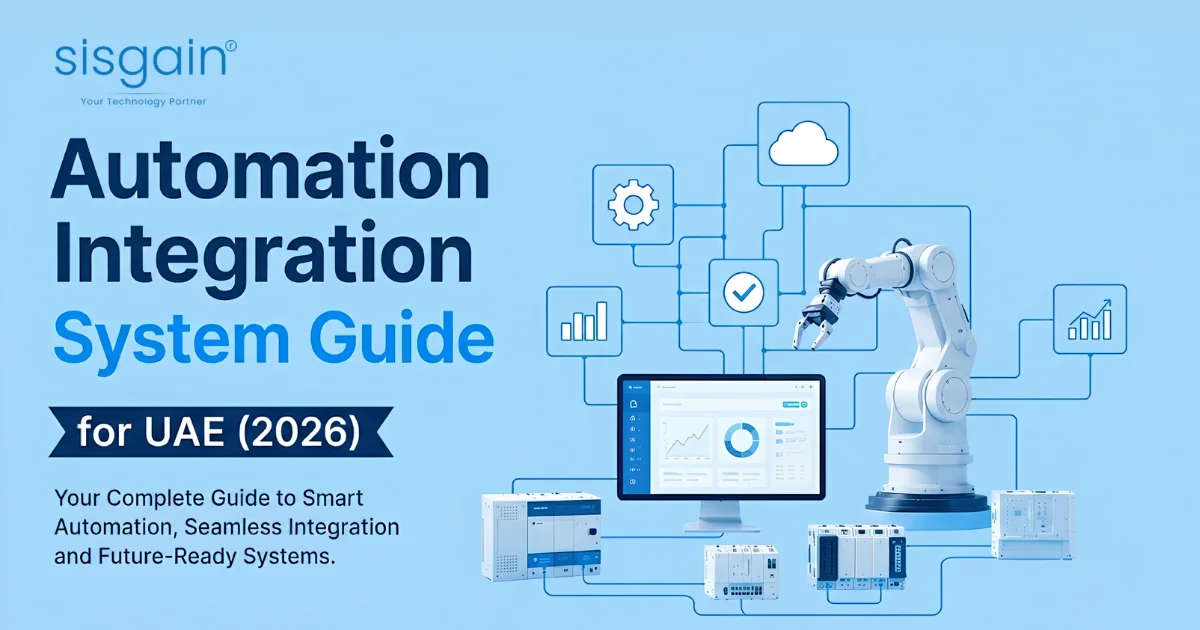
Automation Integration System Guide for UAE (2026)
What Is an Automation Integration System? An automation integration system connects an organization's software, data, and workflows into one automated layer, so information moves between tools like CRM, ERP, and finance systems without manual re-entry. It combines system integration (linking applications) with automation (removing manual steps) and, increasingly, AI-based decision-making. UAE enterprises use it to cut operating costs, speed up approvals, and comply with fast-changing digital government mandates. Key Takeaways An automation integration system is not the same thing as automation alone — it's what happens when integration and automation are designed together, instead of bolted on separately. UAE enterprises are adopting integration automation faster than most of the region, partly because government digital mandates set the pace for the private sector. Global spending on hyperautomation-enabling software is on track to hit roughly $1.04 trillion in 2026, and 90% of large enterprises already treat it as standard practice, not an experiment. Banking, healthcare, logistics, retail, and government services see the fastest returns, usually inside 12–18 months. Most failed rollouts don't fail on technology — they fail on sequencing: automating a broken process before integrating the systems around it. A phased roadmap (assess, pilot, scale) consistently outperforms a big-bang rollout, especially where legacy ERP or on-premise systems are involved. The next wave — AI agents that act inside these systems rather than just triggering them — is already reshaping vendor roadmaps for 2027 and beyond. What an Automation Integration System Actually Means Most conversations about this topic conflate two different things. Integration is the plumbing — APIs, connectors, and data pipelines that let separate systems talk to each other. Automation is what runs through that plumbing — rules and workflows that act without a human clicking "next." An automation integration system is the combination: connected systems and the automated logic that uses those connections to do actual work. The evolution matters here. A decade ago, "integration" mostly meant point-to-point connections — System A talks to System B through a custom script that breaks the moment either system updates. Intelligent integration platforms replaced that with reusable APIs and iPaaS (integration platform as a service) layers that can absorb changes without a rebuild. Layer automation and AI decision-making on top, and you get something that doesn't just move data — it acts on it. A simple way to see the progression: Manual Workflow → Connected Systems → Automation Layer → AI Layer → Business Intelligence Each stage builds on the last. Skip a stage — say, automate before you integrate — and you end up automating a broken, disconnected process faster. That's a common and expensive mistake, and we'll come back to it. Automation vs. Integration vs. Automation Integration System vs. Hyperautomation Term What it means Example Automation Removing manual steps from a single task or process A bot that auto-fills an expense form Integration Connecting two or more systems so data flows between them CRM data syncing into the ERP Automation integration system Integration and automation designed together across multiple systems and workflows Order in the CRM automatically triggers inventory checks, invoicing, and shipping — no human touch Hyperautomation Automation integration extended with AI, process mining, and orchestration at enterprise scale A bank that automates loan origination end-to-end, with AI flagging exceptions for human review Enterprises that outsource this groundwork often start with software integration services in Dubai to handle the API and data layer, then layer robotic process automation services on top once the connections are stable. Why UAE Enterprises Are Rapidly Adopting Automation Integration Systems The UAE's private sector isn't automating in a vacuum — it's responding to a government that has made digital-first operations a national target. The country's National Strategy for Artificial Intelligence 2031 aims to generate up to AED 335 billion in additional economic growth, and separate targets call for lifting AI's share of national GDP from roughly 9% today to 45% by 2031, alongside a push toward fully paper-free government services across all seven emirates. When government services digitize at that pace, vendors, banks, and logistics partners that touch those services have to keep up or get left out of the workflow entirely. That pressure compounds with what's happening globally. Gartner projects the market for hyperautomation-enabling software will reach nearly $1.04 trillion by 2026, and separately, roughly 90% of large enterprises now treat hyperautomation as a standard operating practice rather than a pilot project. UAE enterprises competing for regional and global capital are measured against that baseline, not against slower-moving neighbors. Statistics block: UAE AI Strategy 2031 targets AED 335 billion in additional economic value and a rise in AI's share of GDP from ~9% to 45% Global hyperautomation software spend: ~$1.04 trillion by 2026 (Gartner) 30% of enterprises will automate more than half their network activities by 2026, up from under 10% in 2023 (Gartner) None of these numbers guarantee results for any single company. What they show is direction: budget, government mandate, and competitive pressure are all pointing the same way, at the same time. Why System Integration and Automation Must Work Together Here's the part most vendors skip over: automation and integration each fail on their own. Automate without integrating first, and you speed up a process that's still trapped in a silo — a faster version of a broken workflow is still broken. Integrate without automating, and you've built pipes that move data between systems, but a person still has to look at that data and decide what to do with it. Neither half delivers the outcome on its own. The dependency runs both ways: Without integration → automation has nothing reliable to act on, so it fails or produces errors. Without automation → integration just creates faster-moving data silos, not fewer of them. This is why enterprise automation software integration touches almost every core system in a UAE business at once: APIs, ERP, CRM, HRMS, cloud platforms, and — critically — the legacy systems most companies here still run in parallel with newer cloud tools. How Intelligent Integration Actually Works, Step by Step A customer order is a good example because it moves through nearly every department: Customer submits order → CRM → ERP → Inventory → Finance → Notification → Analytics Dashboard In a disconnected setup, each arrow in that chain is a person: someone re-keys the order into the ERP, someone else checks stock manually, someone emails finance. In an automation integration system, each arrow is an automated handoff, and the only human involvement is exception handling — the 5% of orders that don't fit the standard pattern. Core Components of an Automation Integration System Every serious platform, regardless of vendor, is built from the same core parts: API integration — the connective layer linking applications, databases, and third-party services Workflow automation — the rules engine that moves work from step to step without manual triggers AI decision engine — handles judgment calls (fraud scoring, routing, prioritization) that pure rules can't Business rules engine — encodes company policy (approval limits, compliance thresholds) into the system itself Data synchronization — keeps records consistent across every connected system in near real time Monitoring dashboard — gives IT and operations visibility into what's running, failing, or queued Analytics — turns the operational data flowing through the system into reporting and forecasting Security & governance — access controls, audit trails, and compliance logging, especially critical for UAE-regulated sectors like banking and healthcare Miss any one of these and the system tends to develop a blind spot — usually security or monitoring, since they don't show up as a problem until something goes wrong. Top Business Benefits of Automation Software Integration Each benefit below follows the same shape: a real operational problem, what the system does about it, and the business outcome that follows. Reduce operational costs. Manual data entry and reconciliation eat staff hours across finance, HR, and operations. Automated integration removes the re-keying step entirely, which is usually where the labor cost lives — not in the decision itself, but in the data handling around it. Increase productivity. Staff stop chasing approvals and start doing the parts of their job that actually need judgment. Teams that used to spend a morning reconciling spreadsheets can spend it on the work the spreadsheet was supposed to support. Real-time visibility. Leadership sees inventory, cash flow, or service tickets as they happen, not in a report compiled three days later. For fast-moving sectors like retail or logistics, that lag is often the difference between catching a problem and explaining one. Improve compliance. Rules-based automation applies the same policy every time, and logs every step. That audit trail matters in the UAE's regulated sectors — DIFC-regulated finance, healthcare data handling, and banking compliance all benefit from a system that can't "forget" to log an approval. Reduce human errors. Manual re-entry is where most data errors originate. Removing the re-entry step removes most of the error source with it. Better customer experience. An order, claim, or application that moves through the backend automatically reaches the customer faster — without them ever knowing an automation integration system was involved. That's usually the point: the customer only notices when it's slow. Faster decision-making. Decisions that used to wait for someone to pull a report now happen against live data, sometimes automatically within the rules engine itself. Scalable business growth. Adding transaction volume doesn't require adding headcount at the same rate, which matters for any UAE enterprise scaling across emirates or into new markets.Industry-Wise Applications of Automation Integration Systems in the UAE Banking & Financial Services Loan processing, fraud detection, regulatory compliance, and payment automation are the four areas where integration automation delivers the fastest, most measurable returns in UAE banking — largely because these processes are rules-heavy and already digitized at the data layer. Banks that don't have this expertise in-house typically bring in fintech development experts to handle the compliance-sensitive parts of the build. Healthcare Patient records, billing, insurance claims, and lab system integration all depend on data moving accurately between providers, insurers, and labs — a natural fit for automated integration, with strict governance requirements layered on top. Many UAE providers get here faster by starting from hospital practice management software solutions already built around these data flows, rather than integrating from scratch. Logistics & Supply Chain Shipment tracking, inventory management, fleet coordination, and warehouse operations benefit from real-time data synchronization across every partner in the chain, not just the parts a single company controls. This is where purpose-built AI shipment tracking solutions in UAE tend to outperform generic integration platforms, since they're already tuned to regional carrier and customs data. Retail & E-commerce POS systems, CRM, marketing platforms, and inventory management need to stay in sync constantly, especially during peak periods like Ramadan or the UAE's major retail seasons, when manual reconciliation simply can't keep pace. Retailers usually pair custom retail software development services in Dubai for the backend systems with AI marketing automation in ecommerce app development to keep customer-facing campaigns synced to real-time inventory. Manufacturing Production scheduling, IoT sensor data, ERP systems, and quality control processes come together in automation integration systems that catch defects and bottlenecks before they cascade downstream. Government Citizen services, regulatory compliance, and internal workflow approvals are where the UAE's public sector has led by example — and where private enterprises interfacing with government systems have had to build compatible integration layers of their own. Real UAE Success Story: Digital Ajman Ajman is the smallest emirate, and its government department Digital Ajman used that as an advantage — moving fast on integration rather than trying to modernize everything at once. Problem: Information was siloed across local, federal, and private entities, with wildly inconsistent technology between them. Point-to-point integration with each partner individually wasn't sustainable. Solution: Digital Ajman deployed an integration platform (IBM Cloud Pak for Integration, including API Connect and App Connect Enterprise) to connect finance, planning, utilities, and licensing systems into unified service bundles rather than one-off connections. Result: The clearest example is "Bait Amer," the bundle that handles new-home construction. What used to require 17 separate touchpoints with government entities now takes five. A second integration, the "Bashr" company-formation service, lets investors set up a company entirely online in about 15 minutes, without visiting a single office. Measurable outcome: The integration work has saved over 2 million dirhams through simplified processes, and reduced paperwork enough to save nearly 200 trees a year from eliminated printing. The lesson generalizes well beyond government: the win wasn't automating faster, it was integrating first, then automating the workflow that sat on top of clean, connected data. Step-by-Step Automation Integration Roadmap Enterprises that get this right almost always follow some version of this sequence — and enterprises that skip a phase almost always pay for it later in rework. Business assessment — map current processes, identify where manual handoffs actually cost time and money (not just where they're annoying) Process discovery — document the real workflow, including the exceptions and workarounds staff have built informally Technology selection — choose platforms based on what needs to connect, not on which vendor has the best sales deck Pilot project — run one workflow end-to-end before touching a second; this is where most of the real lessons surface Enterprise rollout — scale the pattern that worked in the pilot, adjusting for department-specific exceptions Optimization — monitor, tune, and retire the manual workarounds that inevitably survive the first rollout Common mistakes at this stage: automating a process before fixing it, skipping the pilot to "save time," and underestimating how much legacy ERP data needs cleaning before it's fit to automate against. Automation Integration Technologies Explained The technical layer behind an automation integration system usually draws from several of these, combined rather than used in isolation: RPA (Robotic Process Automation) — bots that mimic manual, rules-based tasks across existing interfaces AI & Machine Learning — pattern recognition and prediction layered on top of rules-based automation APIs — the connective tissue between modern applications iPaaS — cloud-hosted integration platforms that manage connections at scale Cloud integration — linking on-premise and cloud systems without a full migration Low-code platforms — letting business teams build and adjust workflows without a full development cycle Workflow engines — the orchestration layer that sequences multi-step processes Event-driven architecture — systems that react to triggers in real time, rather than on a batch schedule Microservices — modular application design that makes integration far less brittle than monolithic systems Digital twins — virtual models used mostly in manufacturing and logistics to simulate and monitor physical operations Most UAE enterprises don't build this stack from scratch — they combine specialist robotic process automation services for the task-level automation with intelligent workflow automation solutions for Dubai enterprises to orchestrate everything above it. Best Automation Integration Platforms for UAE Enterprises Platform Best For Strengths Enterprise Size Deployment Microsoft Power Automate Microsoft-ecosystem businesses Deep Office 365/Azure integration, low-code SME to enterprise Cloud UiPath Heavy RPA use cases Strong bot library, AI-assisted automation Mid-size to enterprise Cloud/hybrid Automation Anywhere Complex, high-volume process automation Cloud-native RPA, strong analytics Enterprise Cloud IBM (Cloud Pak for Integration) Legacy + government-grade integration Proven in UAE public sector, strong API management Enterprise Hybrid SAP ERP-centric organizations Deep native ERP automation Enterprise Cloud/on-prem ServiceNow IT and service workflow automation Strong workflow orchestration, ITSM roots Mid-size to enterprise Cloud Boomi Fast iPaaS deployment Quick setup, strong connector library SME to mid-size Cloud MuleSoft API-first integration strategies Mature API management, Salesforce ecosystem Enterprise Cloud/hybrid OutSystems Custom low-code app + automation builds Fast development cycles Mid-size to enterprise Cloud/on-prem Mendix Citizen-developer-led automation Business-user friendly low-code SME to mid-size Cloud No platform here is a universal "best" — the right one depends on what's already running in your environment. A SAP-heavy manufacturer and a Salesforce-heavy retailer will land in very different places. Cost of Automation Integration Systems in the UAE Business Size Typical Implementation Ongoing Support Timeline Payback Period SME Lower-cost, single-workflow deployments Vendor-managed or light in-house 4–8 weeks 6–12 months Mid-size Multi-system integration, several workflows Dedicated support contract 3–6 months 9–18 months Enterprise Full-scale, multi-department rollout Dedicated Automation Center of Excellence 6–12+ months 12–24 months A simple ROI formula to start with: ROI = (Annual Savings from Automation − Total Implementation Cost) ÷ Total Implementation Cost × 100 Savings should include labor hours reclaimed, error-correction costs avoided, and — where relevant — compliance penalties avoided. Costs should include licensing, integration work, staff training, and change management, which is the line item most cost estimates leave out and most projects underestimate. Common Challenges and How to Avoid Them Legacy systems — audit data quality before integrating, not after; garbage in still means garbage out, just faster Employee resistance — involve the staff who actually run the process in the pilot design, not just IT Poor planning — a pilot without a defined success metric isn't a pilot, it's a demo Wrong vendor fit — match the platform to your existing stack, not to the most polished sales pitch Security gaps — build access controls and audit logging into the design phase, not as a post-launch patch Compliance blind spots — UAE-regulated sectors need governance mapped to specific regulatory requirements (DIFC, healthcare, banking) from day one Integration failures — test against real data volumes, not sample datasets, before go-live Hidden costs — budget for change management and training explicitly, since they're usually the first thing cut and the first thing missed later Vendor lock-in — favor open APIs and portable data formats where the option exists How to Choose the Right Automation Integration Partner Run any shortlisted vendor through this checklist before signing: Proven experience with UAE-specific regulatory environments (DIFC, ADGM, healthcare, banking) Industry-specific expertise, not just generic integration know-how Real AI/automation capability, not automation-branded manual configuration Security and compliance credentials appropriate to your sector Local UAE support and implementation teams, not remote-only delivery Architecture that scales past the first project, not just for it Documented case studies with measurable, verifiable outcomes Good Vendor Great Vendor Discovery Asks about your systems Asks about your actual workflow, including the workarounds Proof Shows a demo Shows a reference client with comparable scale Support Ticket-based Dedicated team with UAE time-zone coverage Roadmap Sells the current platform Shows where the platform is going over 2–3 years The Future of Integration Automation Beyond 2026 The direction of travel is toward systems that don't just execute rules — they make more of the judgment calls themselves. Expect these to move from buzzword to standard deployment over the next few years: Hyperautomation as the default operating model, not a differentiator Agentic AI — software agents that plan and execute multi-step tasks, not just respond to triggers Predictive automation — systems that act ahead of a problem, not just in response to one Generative AI embedded directly into workflow and document processing Multi-agent systems coordinating across departments without human orchestration Process mining — using system logs to find inefficiencies humans wouldn't spot Self-healing integrations that detect and repair broken connections automatically For UAE enterprises, the practical implication is straightforward: the systems being built now need to be architected for that next layer, even if the AI layer isn't switched on yet. Retrofitting agentic AI onto a brittle, poorly integrated system is far harder than adding it to one built with clean APIs from the start — a shift covered in more depth in our breakdown of the UAE AI market landscape. Final Thoughts The UAE's push toward digital-first government services isn't a side story to enterprise automation — it's the reason the timeline for adopting an automation integration system has compressed so fast. Waiting isn't a neutral choice anymore; every quarter without integrated, automated workflows is a quarter of manual cost that a competitor isn't carrying. The enterprises getting the most out of this aren't the ones with the biggest budgets. They're the ones that integrated before they automated, piloted before they scaled, and treated an automation integration system as infrastructure — not a one-time project with an end date. Ready to Build an Intelligent Automation Ecosystem? Instead of managing disconnected applications and manual workflows, transform your business with a fully integrated automation platform built for UAE enterprises. Sources: UAE Artificial Intelligence Office (ai.gov.ae), Gartner, IBM Case Studies.
 Vivek Upadhayay
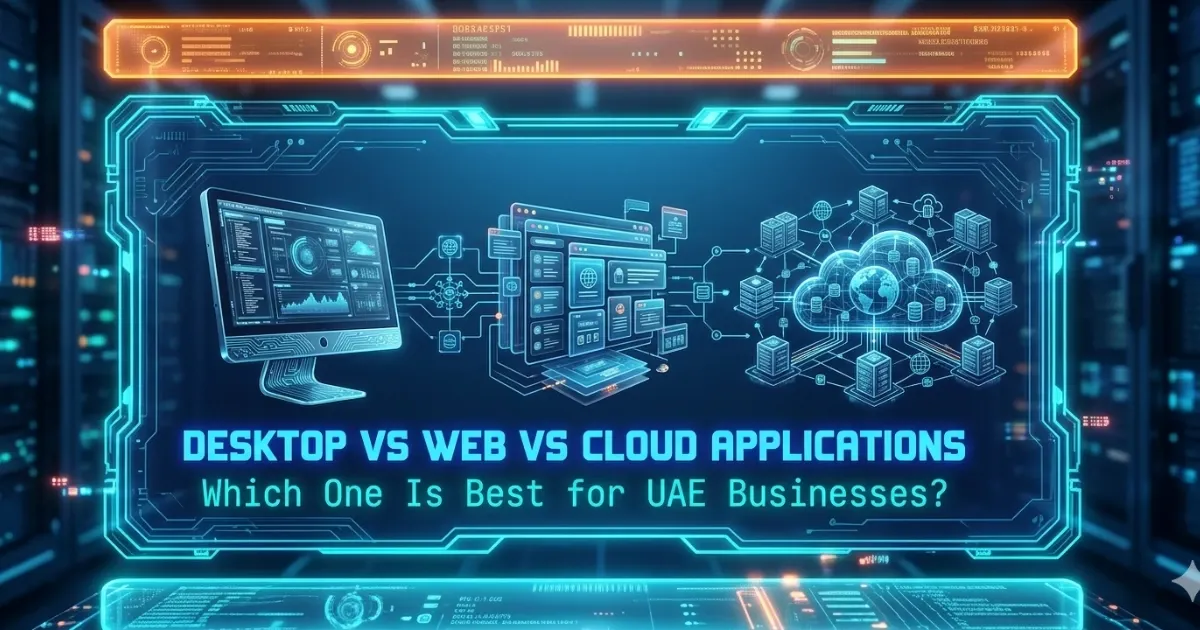
Desktop vs Web vs Cloud Applications: Which One Is Best for UAE Businesses?
Key Takeaways Desktop applications still win on raw performance and offline reliability, making them the right call for manufacturing floors, hospitals, and finance teams that can't afford a dropped connection. Web applications are the default choice for UAE businesses that need remote access, fast deployment, and lower upfront cost without sacrificing too much control. Cloud applications scale automatically and support the hybrid, multi-emirate workforces that define modern Dubai and Abu Dhabi operations. Choosing the wrong architecture early on typically costs UAE businesses 30-60% more in rework, migration, and lost productivity within the first three years. UAE data residency rules (particularly for government, healthcare, and finance) often decide the architecture question before performance or cost even enter the conversation. Why This Decision Costs UAE Businesses More Than They Expect A Dubai-based logistics company we've spoken with spent AED 480,000 building a desktop dispatch system in 2022. Eighteen months later, when their drivers needed to check routes from their phones in Sharjah traffic, the whole system had to be rebuilt from scratch. That's not a rare story. It's what happens when a software decision gets made around today's team size instead of next year's growth. The UAE's digital economy strategy is pushing every sector — healthcare, logistics, retail, government — toward faster, more connected operations. Dubai's government alone has moved over 130 services to fully digital delivery, and businesses across the Emirates are following the same path, often without asking a basic question first: should this software live on a desktop, in a browser, or in the cloud? That question isn't academic. It determines your hosting bill, your compliance exposure, how fast your team can onboard a new hire in Abu Dhabi while headquarters sits in Dubai, and whether your systems can survive a busy Ramadan retail season or a hospital's overnight shift change. Get it wrong, and you're not just paying more — you're rebuilding later, usually at the worst possible time. This guide breaks down desktop, web, and cloud applications in plain terms, compares them across the metrics that actually matter for UAE operations, and gives industry-specific recommendations you can act on today. What Is a Desktop Application? A desktop application is software installed directly onto a device's operating system — Windows, macOS, or Linux — and it runs using that device's own processing power rather than pulling resources from a remote server. Think of the accounting software that only opens on the office computer, or the CAD tool an engineering firm installs on workstations built specifically to handle it. Advantages Runs without an internet connection, which matters on construction sites or in warehouses with patchy signal Uses the device's hardware directly, so processing-heavy tasks (rendering, modeling, large dataset crunching) run faster Full control over data storage location, which can simplify certain compliance conversations No recurring hosting fees since the software isn't relying on external servers Disadvantages Updates have to be pushed to every single machine individually, which gets expensive fast once you're past a handful of devices Employees can't access the software from home or another branch without extra VPN or remote-desktop setup Hardware failures mean data loss unless separate backup systems are in place Scaling to new users means new licenses, new installations, and new IT overhead every time Best Use Cases Desktop applications still make sense where performance and offline access outweigh mobility. A manufacturing plant running real-time machinery diagnostics, an architecture firm doing heavy 3D rendering, or a hospital's radiology department processing large imaging files are all better served by local processing power than a browser tab competing for bandwidth. Examples AutoCAD, QuickBooks Desktop, and many legacy ERP systems used by UAE manufacturing firms are classic desktop applications — installed once, running locally, and rarely touching the internet except to sync occasional updates. What Is a Web Application? A web application runs inside a browser — Chrome, Safari, Edge — and doesn't require installation on the user's device. The actual code executes on a remote server, and the browser simply displays the results. This is the architecture behind most SaaS tools businesses use daily. How It Works When someone opens a web application, their browser sends a request to a server. The server processes that request, often pulling data from a database, and sends back the rendered page. Every interaction — clicking a button, submitting a form — repeats this same request-response cycle, which is why a stable internet connection matters more here than with desktop software. Advantages Accessible from any device with a browser, whether that's a Dubai office desktop or a laptop in Fujairah Updates deploy centrally — push a fix once, and every user gets it immediately, no individual installs required Lower upfront hardware requirements since the heavy processing happens server-side Easier for teams with staff working across multiple emirates or remotely Disadvantages Performance depends heavily on internet quality, which can be inconsistent in certain industrial or rural zones Limited offline functionality unless specifically built with offline-first architecture Browser compatibility issues can crop up across different devices and operating systems Server costs scale with usage, so a sudden spike in traffic (say, a retail flash sale) needs to be planned for in advance Best Industries Retail e-commerce platforms, customer portals, HR systems, and booking platforms tend to fit web applications well, since these all benefit from broad accessibility without needing constant heavy local processing. Examples Gmail, most e-commerce storefronts, and internal HR portals used by UAE enterprises are web applications. The user never installs anything — they just log in through a browser. What Is a Cloud Application? Cloud applications take the web application model further. Rather than relying on a single server, they're built on distributed cloud infrastructure — AWS, Azure, Google Cloud — that automatically allocates resources based on demand. A cloud application can also work with limited offline functionality through local caching, syncing once connectivity returns. Cloud Architecture Cloud applications typically run on a microservices structure, where different functions (payments, notifications, user authentication) operate as independent services rather than one monolithic codebase. This means a spike in checkout traffic during a Dubai Shopping Festival sale doesn't have to slow down the rest of the application — the cloud infrastructure adds server capacity to just that function, automatically, then scales back down once demand drops. Advantages Scales automatically during demand spikes without manual server provisioning Built-in redundancy across data centers reduces downtime risk Supports remote and hybrid teams natively, which matters given how spread out UAE workforces often are across free zones and emirates Pay-as-you-go pricing models mean businesses aren't paying for idle server capacity Disadvantages Ongoing subscription and infrastructure costs can add up over years, even if they're lower upfront Data residency becomes a real conversation — some UAE regulations require certain data to stay within the country or region Vendor lock-in is a genuine risk if the architecture isn't built with portability in mind Requires more specialized DevOps expertise to manage properly than a simple web app Use Cases Multi-branch retail chains, logistics companies tracking fleets across the GCC, fintech platforms processing transactions at scale, and healthcare networks syncing patient records across facilities all benefit from cloud-native architecture. Examples Salesforce, Microsoft 365, and most modern fintech platforms operating in the UAE run on cloud infrastructure, distributing workloads across multiple servers rather than relying on one machine. Desktop vs Web vs Cloud Applications: Full Comparison Factor Desktop Web Cloud Development Cost High (per platform) Moderate Moderate to High initially Maintenance High (per device) Low to Moderate Low (centrally managed) Security Strong (local control) Moderate (server-dependent) Strong (with proper configuration) Performance Excellent (local hardware) Good (bandwidth-dependent) Excellent (auto-scaling) Accessibility Limited to device High (any browser) Highest (any device, anywhere) Scalability Poor Moderate Excellent Offline Support Full Minimal to None Partial (with caching) Deployment Slow (manual installs) Fast Fast Updates Manual, per-device Centralized, instant Centralized, instant Integration Limited Good Excellent Compliance Easier for strict data residency Moderate Requires careful region selection Remote Work Poor without VPN Good Excellent Best Business Size Small teams, fixed location SMEs, growing teams SMEs to Enterprise Customization High Moderate to High High Time to Market Slow Fast Moderate Future Readiness Declining Stable Growing ROI Long-term for niche use Moderate, steady Strong at scale Which Application Type Is Best for UAE Businesses? There's no universal answer here — the right architecture depends on what the business actually does day to day, not what's trending. Here's how it typically breaks down by sector. Healthcare: Cloud, with strict UAE data residency configuration. Patient records need to sync across facilities while meeting Dubai Health Authority and DoH Abu Dhabi requirements. Retail: Web or cloud, depending on scale. A single boutique might only need a web-based POS and inventory system; a multi-branch chain needs cloud infrastructure to sync stock levels in real time. Manufacturing: Desktop for floor-level machinery control, cloud for supply chain and inventory oversight. Most manufacturing firms end up running a hybrid of both. Construction: Web applications for project management and cloud for document sharing across sites, since teams are rarely all in one location. Government: Cloud, but almost always a private or government-community cloud rather than public cloud, due to sovereignty requirements. Education: Web applications for student portals and learning management, cloud for institutions running multiple campuses. Hospitality: Cloud, without much debate. Booking systems, guest management, and multi-property coordination all depend on real-time synchronization. Logistics: Cloud is close to mandatory for GCC-wide fleet tracking and route optimization. Real Estate: Web applications for listings and CRM tools; cloud for firms managing properties across multiple emirates. Finance: A careful mix. Core transaction processing often needs to stay on secured, sometimes on-premises or private cloud infrastructure to satisfy Central Bank of the UAE requirements, while customer-facing portals run on the web. Development Cost Comparison Cost is rarely just the invoice from the development firm. It's the invoice plus everything that follows — hosting, licensing, scaling, and the slow creep of maintenance work nobody budgeted for. Cost Factor Desktop Web Cloud Enterprise Hybrid Initial Cost AED 80,000 - 300,000+ AED 40,000 - 150,000 AED 60,000 - 250,000 AED 250,000 - 1,000,000+ AED 150,000 - 500,000 Maintenance Cost (Annual) 15-25% of build cost 10-20% of build cost 15-20% of build cost 20-25% of build cost 18-22% of build cost Hosting None (local install) AED 5,000 - 30,000/year AED 15,000 - 100,000+/year Custom, usage-based Mixed local + cloud Licensing Per-device, one-time or annual Per-user subscription Usage-based or tiered Custom enterprise agreements Combination model Infrastructure Client hardware only Shared server infrastructure Dedicated cloud resources Dedicated + redundant Both on-prem and cloud Scaling Cost High (new licenses + hardware) Moderate Low (automatic) Planned, budgeted Moderate to Low Long-Term ROI Strong for single-location, stable teams Steady for growing SMEs Strong at scale, weaker for tiny teams Strong if fully utilized Balanced Businesses evaluating Software Application Development Costs in 2026 often underestimate the maintenance line the most — it's rarely the headline number that breaks a budget, it's what shows up eighteen months in. Need expert guidance choosing the right application architecture? SISGAIN helps UAE businesses build secure, scalable, and future-ready software solutions. How to Choose the Right Architecture Business Goals: A startup chasing rapid customer acquisition needs different software than a manufacturing firm optimizing a fixed production line. Define the actual business outcome before picking a technology stack to serve it. Budget: Desktop software often looks cheaper upfront and gets expensive at scale. Cloud looks pricier upfront and gets cheaper per user as the business grows. Match the model to your growth curve, not just this year's budget. Security: Regulated industries — healthcare, finance, government — need to map data flows against UAE compliance requirements before choosing infrastructure, not after. Compliance: Some data simply cannot leave UAE borders under current regulations. This alone eliminates certain cloud providers or requires a UAE-based data center from day one. Growth: If you expect to double headcount in two years, architecture that scales with minimal rework saves real money later. Remote Teams: A business with staff spread across Dubai, Abu Dhabi, and Sharjah has effectively already answered the desktop-vs-cloud question. Integration: Check what your software needs to talk to — accounting systems, payment gateways, government portals — before locking in an architecture that can't integrate cleanly. Existing Infrastructure: Rebuilding from zero rarely makes sense if 70% of current systems can be modernized instead of replaced outright. Migration Strategy Moving from one architecture to another is rarely a weekend project, and treating it like one is where most migration budgets go sideways. Desktop to Web This usually means rebuilding the user interface entirely while porting over business logic. The biggest risk is underestimating how much desktop-specific functionality (offline mode, deep hardware integration) doesn't translate directly to a browser. Desktop to Cloud A more involved jump. Data structures often need re-architecting for distributed access, and legacy desktop databases rarely map cleanly onto cloud-native storage without a proper migration plan. Web to Cloud Generally the smoothest of the three paths, since web applications already share some architectural DNA with cloud systems. The main work is decoupling the application into services that can scale independently. Legacy Modernization Many UAE enterprises are sitting on 10-15 year old systems that still technically work. Modernization doesn't always mean a full rebuild — sometimes wrapping legacy systems with modern APIs buys years of extra life at a fraction of the cost. Migration Challenges Data loss risk during transfer, downtime during cutover, staff retraining, and underestimated testing time are the four issues that derail most migration timelines. None of them are exotic — they're just consistently under-planned for. Security Considerations Security isn't a single feature you bolt on — it's a set of decisions that touch every layer of the architecture. Data Encryption: Data should be encrypted both at rest and in transit, regardless of architecture. Cloud platforms typically offer this by default; desktop systems need it configured deliberately. Authentication: Multi-factor authentication has moved from "nice to have" to baseline expectation, particularly for any system touching financial or medical data. Authorization: Role-based access control ensures a warehouse staff member and a finance director aren't operating with the same system permissions. Backups: Desktop systems need a deliberate backup strategy since data lives locally. Cloud systems usually build this in, but "usually" isn't "always" — verify it contractually. Disaster Recovery: A documented recovery plan with a defined recovery time objective matters more than the architecture choice itself. Even the best cloud setup fails without one. Compliance: UAE businesses need to track multiple overlapping frameworks depending on sector and data type. GDPR applies if the business handles any EU citizen data, regardless of where the company is based. ISO 27001 certification is increasingly requested by UAE enterprise clients as a baseline trust signal. UAE-specific regulations, including Dubai's Data Protection Law and sector rules from the Central Bank and Dubai Health Authority, often dictate exactly where data can physically reside. Firms looking to Secure, and Optimize Your Entire Infrastructure typically find that security gaps trace back to configuration choices made at launch, not flaws in the underlying platform itself. Future Trends AI-powered software is moving from a differentiator to a baseline expectation, particularly in customer service and predictive maintenance applications. Low-code platforms are letting UAE SMEs build functional internal tools without a full development team, though they hit real limits once customization needs grow complex. Cloud-native architecture is becoming the default starting point for new builds rather than something retrofitted later. Serverless computing removes the need to manage underlying infrastructure at all, charging only for actual execution time — a meaningful cost advantage for applications with unpredictable traffic. Edge computing is gaining traction for manufacturing and logistics use cases where processing needs to happen physically close to the data source rather than round-tripping to a distant server. Hybrid cloud setups, combining private infrastructure for sensitive data with public cloud for everything else, are becoming the practical answer for regulated UAE industries rather than an either-or choice. Multi-cloud strategies are reducing vendor lock-in risk, letting businesses distribute workloads across providers. AI automation is reshaping how businesses handle repetitive operational tasks, from invoice processing to customer query routing. Companies exploring Advanced Technologies Powering Software Development in Dubai are increasingly building with these trends as a starting assumption rather than an afterthought bolted onto legacy systems. Need expert guidance choosing the right application architecture? SISGAIN helps UAE businesses build secure, scalable, and future-ready software solutions. Common Mistakes Businesses Make Choosing architecture based on current team size instead of where the business will be in three years. Ignoring UAE data residency requirements until a compliance audit forces an expensive mid-project pivot. Underestimating maintenance costs, which often exceed the initial build cost within two to three years. Building desktop software for a workforce that's about to go remote or hybrid. Skipping a proper security audit before launch, treating it as a post-launch task instead. Assuming cloud is always cheaper without modeling actual usage patterns and long-term subscription costs. Not planning for integration with existing accounting, HR, or government portal systems from the start. Over-customizing early, building features nobody asked for while core functionality still has gaps. Choosing a vendor based on price alone, without checking their track record supporting similar UAE-regulated businesses. Delaying migration decisions too long, letting legacy systems become so entangled with daily operations that modernization gets riskier every year it's postponed. Failing to document a disaster recovery plan, discovering the gap only after an actual outage. Final Verdict Choose Desktop if your operations are location-fixed, performance-critical, and rarely need remote access — think manufacturing floors, specialized engineering work, or single-location clinics with heavy imaging needs. Choose Web if your business needs broad accessibility, moderate scalability, and a faster, more budget-friendly path to market — this covers most SMEs, retail operations, and service businesses across the UAE. Choose Cloud if your business spans multiple locations, needs to scale unpredictably, or operates in a sector — logistics, hospitality, fintech — where real-time synchronization across teams isn't optional. Most mid-size and enterprise UAE businesses end up somewhere in between, running a hybrid setup that keeps sensitive processing local while pushing everything else to the cloud. That's not indecision — it's usually the correct answer once the full picture is on the table. Conclusion The desktop, web, and cloud decision isn't really about technology preference — it's about matching architecture to how a business actually operates, where its data needs to live, and how fast it plans to grow. A manufacturing firm and a multi-branch retail chain have almost nothing in common operationally, and their software shouldn't either. What consistently separates UAE businesses that scale smoothly from those that end up rebuilding mid-flight is whether this decision got made deliberately, with real input on compliance, growth plans, and team structure, rather than defaulting to whatever felt familiar or cheapest at the time. SISGAIN has spent years helping UAE businesses across healthcare, logistics, retail, and finance work through exactly this decision — mapping the right architecture to the actual business first, then building it properly the first time. Whether that ends up being a desktop system, a web platform, a cloud-native build, or some hybrid of the three depends entirely on what the business needs, not what's trending this year.
 Vivek Upadhayay
15 Ways ERP Software Helps UAE Businesses Reduce Costs, Increase Productivity & Scale Faster
Run a business in Dubai, Abu Dhabi, or Sharjah for more than a year and you'll hit the same wall every growing company hits: spreadsheets stop working. Finance is in one tool, inventory in another, HR is tracked on WhatsApp and Excel, and nobody has the full picture at the same time. Meanwhile, the FTA wants clean VAT records, your bank wants audited numbers, and your customers want faster delivery than last year. That's the exact gap ERP software in UAE is built to close. Enterprise Resource Planning brings finance, inventory, HR, procurement, and sales into one connected system, so decisions get made on real numbers instead of guesswork. This isn't a theoretical benefit. UAE businesses operate under specific pressures — mandatory VAT reporting, an upcoming e-invoicing mandate, Emiratization quotas, multi-emirate and free-zone structures, and a labor force that speaks Arabic, English, Hindi, and Urdu on the same shop floor. Generic advice about "improving efficiency" doesn't address any of that. This guide does. Below are 15 concrete, UAE-specific ways ERP software cuts costs, boosts productivity, and helps you scale — plus what to actually look for before you sign a contract. Key Takeaways ERP unifies your entire business by connecting finance, HR, inventory, procurement, sales, and operations into one centralized platform. Eliminates data silos and provides a single source of truth, ensuring every department works with accurate, real-time information. Automates UAE VAT compliance and prepares businesses for the upcoming FTA e-invoicing mandate, reducing manual effort and compliance risks. Cuts operational costs by reducing manual data entry, minimizing errors, and eliminating duplicate processes across departments. Improves productivity through workflow automation, allowing employees to focus on strategic tasks instead of repetitive administrative work. Provides real-time business insights with live dashboards for revenue, inventory, cash flow, procurement, and financial performance. Optimizes inventory management by tracking stock across multiple warehouses, reducing overstocking, stockouts, and unnecessary inventory costs. Simplifies multi-branch operations by managing businesses across Dubai, Abu Dhabi, Sharjah, free zones, and international locations from one system. Automates HR and payroll processes, including WPS compliance, gratuity calculations, leave management, and Emiratization reporting. Supports global business operations with multi-currency transactions and bilingual (Arabic & English) capabilities. Enhances customer experience by integrating CRM, finance, and order management into a single customer view. Strengthens data security through role-based access controls, audit trails, encryption, and secure cloud infrastructure. Leverages AI-powered intelligence for demand forecasting, predictive maintenance, financial forecasting, and anomaly detection. Scales with business growth through modular ERP architecture, allowing organizations to add new modules without replacing the entire system. Delivers long-term competitive advantage by enabling faster decision-making, improving compliance, reducing costs, and creating a foundation for sustainable business growth in the UAE. What Is ERP Software, Exactly? Enterprise Resource Planning (ERP) is a single software platform that connects a company's core functions — finance, inventory, procurement, HR, sales, and manufacturing — into one shared database. Instead of five disconnected tools each holding a partial version of the truth, everyone works off the same live numbers. For a UAE business, that means your Dubai showroom, Abu Dhabi warehouse, and Sharjah factory can all report into one system in real time. Now let's get into the 15 ways this actually pays off. 1. It Centralizes Data Across Every Department Right now, your sales team probably has one number for stock on hand, your warehouse has another, and finance has a third—all pulled at different times, all slightly wrong. An ERP system in UAE businesses run on eliminates that by keeping one single source of truth. When a sales rep in Dubai closes a deal, the same system that logged the sale updates inventory, triggers procurement if stock is low, and feeds the number straight into your P&L. No re-entry, no reconciliation meetings, no "let me check with warehouse and get back to you." Companies running fragmented systems typically spend 5-10 hours a week per department just cross-checking numbers between tools. That's time an ERP gives back immediately. 2. It Automates VAT and FTA Compliance This is the one that matters most right now. The UAE's phased e-invoicing mandate is rolling out, with Peppol-based real-time reporting to the Federal Tax Authority becoming mandatory for large taxpayers first and expanding from there. Businesses still generating invoices manually in Excel are going to struggle to keep up. ERP software in UAE built for local compliance auto-generates VAT-compliant invoices, applies the correct tax treatment across mainland, free zone, and designated zone transactions, and produces FTA-ready VAT return reports in a few clicks instead of a few days. Get this wrong and you're not just inefficient — you're exposed to penalties. Get it right and VAT season stops being a fire drill. 3. It Cuts Manual Data Entry and Human Error Every manual entry point is a chance for a typo, a missed decimal, or a duplicated invoice. A mid-sized trading company processing 200 invoices a month with manual entry will typically see error rates high enough to cause real reconciliation headaches every quarter. ERP systems auto-populate data across modules. Enter a purchase order once, and it flows through receiving, accounts payable, and inventory without anyone retyping it. Fewer touchpoints means fewer mistakes — and fewer mistakes means less time spent hunting down where a number went wrong. 4. It Gives You Real-Time Inventory and Supply Chain Visibility Dubai's position as a re-export and logistics hub means many businesses here are juggling stock across ports, free zones, and multiple warehouses simultaneously. Without a connected system, that visibility gap causes two expensive problems: overstocking (cash tied up in slow-moving goods) and stockouts (lost sales because nobody saw the shortage coming). A properly configured ERP solutions UAE companies rely on tracks stock levels, reorder points, and supplier lead times in real time across every location. Retailers and distributors running this well report meaningfully leaner inventory holding while cutting stockout-driven lost sales. 5. It Streamlines Multi-Branch, Multi-Emirate Operations Very few UAE companies operate out of a single location for long. You open in Dubai, then add a branch in Abu Dhabi, then a free-zone entity for export, then a warehouse in Sharjah for cheaper storage. Each of those used to mean a separate set of books, a separate inventory count, and a separate headache at month-end. Dubai ERP platforms built for multi-entity operations consolidate all of that into one dashboard, while still letting each branch or entity keep its own records for local reporting and audit purposes. You get the full group picture and the entity-level detail, without duplicating work. 6. It Delivers Real-Time Financial Reporting and Forecasting Waiting until month-end to find out your margins slipped is waiting a month too long. ERP systems generate live P&L statements, cash flow reports, and balance sheets pulled directly from operational data — not from someone manually exporting numbers into a spreadsheet three weeks after the fact. For UAE businesses managing multi-currency trade (AED, USD, and often EUR or INR in the same books), this also means automatic exchange rate handling and consolidated reporting without a finance team manually converting every line. That's the difference between reacting to last quarter's problem and catching this week's. 7. It Automates Payroll, WPS, and Emiratization Reporting Payroll in the UAE isn't just "pay people on time." It's Wage Protection System (WPS) compliance, gratuity calculations that change with tenure, visa and labor card tracking, and — for many sectors — Emiratization quota reporting to MOHRE. A UAE-configured enterprise resource planning UAE payroll module handles all of it: automated WPS file generation, end-of-service gratuity calculated per UAE labor law, and Emiratization percentage tracking so you know exactly where you stand before an audit, not after a fine. 8. It Supports Multi-Currency and Multi-Language Operations The UAE trades with practically everyone. Your suppliers might invoice in USD, your local sales are in AED, and your workforce reads instructions in Arabic, English, and sometimes Hindi or Urdu on the factory floor. A system built for a single-currency, single-language market simply doesn't work here. Modern ERP software UAE vendors ship supports live exchange rate conversion, dual-language interfaces (Arabic and English at minimum), and multi-currency financial consolidation — so a Dubai-based distributor buying from China and selling to Saudi Arabia can run all of it through one clean set of books. 9. It Speeds Up Decision-Making With Live Dashboards A CEO who has to ask three department heads for numbers before making a call is a CEO making decisions a week too late. ERP dashboards put sales trends, cash position, inventory turnover, and production output on one screen, updated as transactions happen. This matters more in fast-moving markets like retail and F&B, where a stockout or a slow-moving SKU needs a same-day decision, not a next-Monday one. Owners running ERP-backed dashboards consistently report shorter decision cycles simply because they stop waiting on reports to be compiled. 10. It Lowers IT Overhead With Cloud Deployment On-premise servers mean hardware costs, IT staff to maintain them, and a single point of failure if something goes down. The cloud-based ERP system Dubai businesses are increasingly adopting shifts that cost from a large upfront investment to a predictable monthly subscription, with the vendor handling servers, security patches, and uptime. For SMEs especially, this removes a large upfront capital cost and replaces it with an operating expense that scales with usage. You're not buying a server room; you're buying access to one that someone else maintains better than you could in-house. 11. It Strengthens Customer Relationship Management Sales and service data living in a separate CRM from your finance and delivery data means your sales team promises delivery dates your warehouse can't hit, and your support team has no idea a customer's invoice is overdue when they call in with a complaint. An ERP with an integrated CRM module gives every customer-facing team the same live view: order status, payment history, delivery timelines, and support tickets in one place. That consistency is what turns a one-time buyer into a repeat one — because nothing frustrates a customer faster than getting a different answer from two people at the same company. 12. It Modernizes HR From Hiring to Retirement HR in a growing UAE company covers a lot: recruitment, onboarding, visa processing, leave management, performance reviews, and eventually end-of-service settlement. Doing this across spreadsheets and email threads doesn't scale past a certain headcount. ERP HR modules manage the full employee lifecycle in one place — automated leave balances, performance tracking tied to KPIs, and gratuity calculations that update automatically as tenure grows. For a company hiring 20-30 people a year, that's the difference between an HR team drowning in admin and one that actually has time for talent development. 13. It Scales With You Instead of Holding You Back The trap with cheap, rigid software is that it works fine at 10 employees and completely breaks at 100. Modular ERP architecture means you start with finance and inventory, then add HR, manufacturing, or a CRM module as you actually need them — without ripping out and replacing your core system. This modularity is exactly why so many UAE SMEs work with a Custom Software Development Company in Dubai to configure ERP around their specific growth plan rather than forcing their operations into a rigid, one-size-fits-all package built for a different market. 14. It Strengthens Data Security and Audit Readiness Financial audits, VAT audits, and increasingly cybersecurity due diligence from banks and investors all require clean, traceable records. A spreadsheet doesn't have an audit trail. An ERP system logs every transaction, every edit, and every user who touched a record, with role-based access so your junior accountant can't approve their own expense claims. For businesses working with software development firms in uae to build or customize ERP, security architecture — encryption, role-based permissions, regular backups — should be a baseline requirement, not an add-on you negotiate later. 15. It Integrates AI for Predictive, Not Just Historical, Insights This is where ERP is heading fastest. Static reporting tells you what happened last month. AI-enabled ERP tells you what's likely to happen next month — predicting stock shortages before they hit, flagging invoices likely to go overdue, and forecasting cash flow gaps weeks in advance. This shift is part of a broader pattern: AI Software Is Replacing Traditional Software Across Industries, and ERP is one of the clearest examples. Businesses investing in AI Software Development in UAE are building predictive maintenance into manufacturing ERP modules, demand forecasting into retail inventory, and anomaly detection into finance — turning the ERP from a record-keeper into a forecasting tool. Key Features to Check Before You Buy Not all ERP platforms marketed toward the region are actually built for it. A lot of "global" ERP software gets a light Arabic translation slapped on and is sold as UAE-ready when it isn't. Before you sign anything, run the platform against this checklist: Feature Why it matters in the UAE Red flag to watch for FTA-compliant VAT engine Wrong tax treatment on free-zone vs. mainland transactions creates audit risk Vendor says VAT is "configurable" but has no UAE reference clients E-invoicing readiness Peppol-based reporting is rolling out in phases No public roadmap for e-invoicing support WPS payroll file generation Mandatory for salary processing compliance Payroll module built for a different country's labor law Bilingual Arabic/English UI Shop-floor and back-office staff often read different languages Arabic support limited to invoice templates only Multi-currency consolidation Trade with China, India, Europe, and GCC neighbors in different currencies Manual exchange rate entry required Free-zone and mainland entity support Many UAE groups run both structures simultaneously System treats all entities identically Local data hosting or UAE-compliant cloud region Data residency expectations for regulated sectors Vendor can't confirm where data physically sits Modular pricing Lets you start small and add HR, manufacturing, or CRM later All-or-nothing licensing forces you to pay for unused modules If a vendor can't answer these clearly in the first sales call, that's usually a sign they're selling a generic product with a UAE label on it, not a system actually built for how business gets done here. How Much Does ERP Implementation Cost in the UAE? Cost depends heavily on whether you go with an off-the-shelf platform or a custom build. Off-the-shelf cloud ERP for a small business typically starts in the low tens of thousands of AED annually, scaling with users and modules. Custom-built ERP, tailored to a specific industry workflow, costs more upfront but avoids the ongoing cost of forcing your business to work around software limitations. If you're comparing options, it's worth reviewing the Average Software Development Cost in 2026 and, if AI features are on your roadmap, the AI Development Cost in Dubai — both will shape whether off-the-shelf or custom makes more financial sense for your specific case. Choosing Between Off-the-Shelf and Custom ERP Not every business needs a custom build, and not every business should settle for a generic one either. Off-the-shelf ERP software Dubai vendors sell works well when your processes are fairly standard — a typical trading or retail business with common workflows can usually get running fast on a pre-built platform with minor configuration. Custom ERP makes more sense when your workflow doesn't fit a template — a manufacturer with a unique production sequence, a logistics company with non-standard routing rules, or a healthcare provider needing specific compliance tracking. In these cases, working with established Software Companies in Dubai to build around your exact process usually costs less over three years than paying for endless customization of a rigid off-the-shelf tool. Which UAE Industries Benefit Most From ERP? Retail and e-commerce — real-time stock visibility across physical stores and online channels, POS integration, and demand forecasting ahead of peak seasons like Ramadan and DSF. Construction and real estate — project costing, subcontractor payment tracking, and milestone-based billing across multiple concurrent developments. Logistics and trading — multi-warehouse inventory, customs and free-zone documentation, and shipment tracking tied directly to financial records. Manufacturing — production planning, raw material procurement, and quality control integrated with cost accounting. Healthcare — patient billing, insurance claim tracking, and inventory management for medical supplies with expiry-date sensitivity. Hospitality — multi-property finance consolidation, procurement across F&B and housekeeping, and workforce scheduling for a highly seasonal industry. A Realistic Implementation Timeline Businesses often underestimate how long ERP rollout takes, then get frustrated when week four looks nothing like the finished product. A realistic phased timeline looks something like this: Weeks 1-2: Discovery and process mapping. The vendor documents how your finance, inventory, and HR processes actually work today — not how the org chart says they work. Weeks 3-6: Configuration and data migration. Chart of accounts, VAT setup, inventory items, and employee records get built out and historical data gets migrated in. Weeks 7-9: Testing and parallel run. Your team runs the new system alongside the old one for a cycle or two, catching gaps before full cutover. Weeks 10-12: Go-live and stabilization. Full cutover, with the vendor on standby for the first few close cycles while your team adjusts. Custom builds with heavy industry-specific workflows — manufacturing production sequences, construction milestone billing — extend this to three to six months. Rushing this process to save a few weeks is the single most common reason ERP rollouts fail; a company that skips proper data migration and testing usually spends the following six months fixing errors that a two-week testing phase would have caught. Signs Your Business Needs ERP Now If more than two or three of these sound familiar, it's a strong signal you're past the point where spreadsheets and disconnected tools are enough: Month-end closing takes more than a week because someone's manually reconciling numbers between systems. You've had a stockout or an overstocking problem in the last quarter that a live inventory view would have caught. VAT filing involves someone manually pulling data from three different places. You can't get a same-day answer to "what's our cash position right now?" You're opening a second location and dreading how you'll keep the books in sync. Payroll or WPS processing takes your HR team more than a day each month. Getting Started: What to Look for in an ERP Partner Before signing with any vendor, confirm three things. First, does the platform natively support UAE VAT and the upcoming e-invoicing requirements, or will you need a separate compliance layer bolted on? Second, does it handle Arabic-English bilingual operation out of the box? Third, can it scale with modules as you grow, instead of forcing a full migration in two years? Talk to a few software development firms in uae before committing. Ask for references from businesses in your specific sector, not just a generic client list — an ERP that works beautifully for a retail chain may be the wrong fit for a construction firm's project-based billing needs. The Real Question Isn't Whether You Need ERP It's whether you can afford to keep running without it while competitors automate their VAT filings, forecast their inventory, and close their books in two days instead of two weeks. UAE's market moves fast, and the businesses pulling ahead right now aren't necessarily the ones with the biggest budgets — they're the ones with the clearest, fastest access to their own numbers. If you're weighing an off-the-shelf platform against a custom build, or want to understand what AI-enabled ERP could realistically do for your specific operation, talk to a team that builds ERP systems for UAE businesses day in and day out. Get the scoping conversation right, and the rest of the implementation gets a lot easier.